How to Change PDB DBID in Oracle Using the Clone Method
In Oracle Multitenant architecture, every Pluggable Database (PDB) has a unique DBID (Database Identifier). Oracle and tools like RMAN use this identifier…
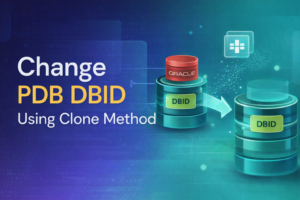
In Oracle Multitenant architecture, every Pluggable Database (PDB) has a unique DBID (Database Identifier). Oracle and tools like RMAN use this identifier…
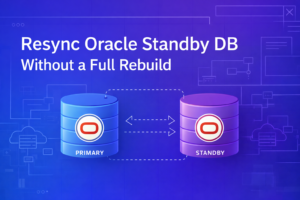
Every DBA managing an Oracle Data Guard setup eventually faces this situation. The standby database has fallen behind the primary, archive logs…
Everything you need to know — from concepts to day-to-day commands What Is the Oracle Recycle Bin? Introduced in Oracle 10g, the…
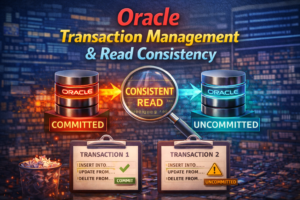
Oracle’s transaction management and read consistency mechanisms are fundamental to maintaining data integrity in multi-user environments. Understanding how Oracle handles concurrent transactions,…
When you execute ROLLBACK;, Oracle discards all uncommitted changes and restores data to its previous state. Understanding ROLLBACK is essential for transaction…
When you execute COMMIT;, Oracle makes all your DML changes permanent. This seemingly simple statement triggers a complex series of operations involving…

When you execute DELETE FROM employees WHERE employee_id = 101;, Oracle performs a complex series of operations involving row location, undo generation,…
When you execute UPDATE employees SET salary = 60000 WHERE employee_id = 101;, Oracle performs a sophisticated series of operations involving undo…

When you execute a simple INSERT INTO employees VALUES (101, 'John', 'Doe', 50000); statement, Oracle performs a complex series of operations involving…
When you execute a simple SELECT * FROM employees WHERE department_id = 10; query, have you ever wondered what happens behind the…